
New Delhi, India – Prime Minister Narendra Modi’s government is poised to levy new charges for using the country’s popular, homegrown instant digital payment system for select merchant transactions, raising concerns for businesses.
India’s quasi-governmental National Payments Corporation of India (NPCI) has announced that a 0.4 percent fee will apply from October 15 to all UPI (Unified Payments Interface) transactions above 2,000 rupees ($21) made to businesses.
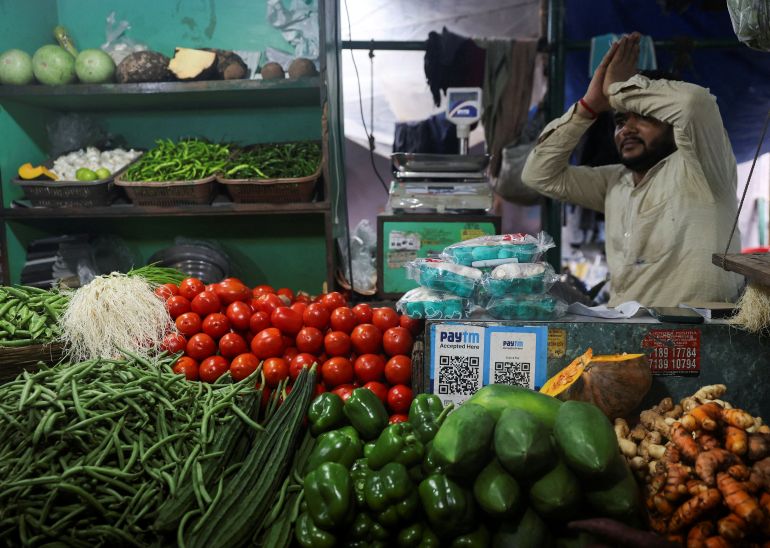
Since its introduction a decade ago, the UPI – which allows customers to make instant payments via apps, free of any cost – has transformed how the world’s largest population makes payments. From street vendors to global brands in shopping malls, QR codes are everywhere in India, as cash increasingly gives way to digital payments.
However, experts warn that the new charges could push businesses out of the system. The move has also triggered a political storm in India, with the opposition accusing Modi of passing on costs to merchants under foreign pressure.
So, what is changing in India’s UPI payments? And who stands to gain and lose?
What changes are being made to UPI?
Payments made to businesses worth more than 2,000 rupees ($20.84) will incur a levy of 0.4 percent, capped at 300 ($3.13) rupees.
All person-to-person transactions will remain free. Paying for other services, such as at fuel pumps, for railway tickets, or telecom bills, will have a flat fee of five rupees imposed per transaction.
The government is calling the new levy the Merchant Discount Rate (MDR), through which the cost of maintaining the digital payment infrastructure is shifted to businesses.
So far, the costs of operating UPI have been borne by banks and fintech companies, which have also benefitted commercially from the system, while government incentives have supported its zero-MDR model.
Under the new policy, the government will bar merchants from passing on the additional cost to customers. However, the reality is already shifting.
Vikas Mahto, who operates an all-purpose grocery store in the National Capital Region, has already started charging a flat five-rupee ($0.05) fee on all transactions above 1,000 rupees ($10.42). “If the government charges us, we increase costs for customers,” he told Al Jazeera.
“It’s simple maths.”
How big is India’s UPI system?
The sheer scale of the system is mammoth, setting it apart from other digital payment interfaces around the world.
Last month, UPI processed an all-time record of 24.51 billion transactions – that’s 791 million transactions per day, worth more than $10bn daily.
The government said it had processed 241.6 billion transactions in the last financial year, worth nearly $3.3 trillion, supporting 741 banks across the country.
This transaction volume accounts for nearly half of all global real-time digital payment transactions daily.
The government frequently showcases the system, with PM Modi showing off the interface to foreign dignitaries, which is now live for merchant payments in 10 countries, including Singapore, the UAE, France, Sri Lanka and Qatar.
“UPI has emerged as the backbone of India’s digital payments ecosystem and a critical driver of financial inclusion,” the government said in a statement marking a decade of the interface last month.
How is the government selling this new policy?
The decision has caused a nationwide furore among users of the digital payments system. The key to UPI’s widespread adoption was its lack of charges to process transactions.
Over the past decade, several companies, including PhonePe, Google Pay and Paytm, have complained that when they process huge UPI volumes, they have limited direct monetisation of those transactions. However, amassing millions of users on the platform allowed them to sell many different types of services to returning customers, from cash or gold loans to insurance.
Under the new MDR, analysts have estimated an annual revenue pool of about 170 billion rupees ($1.7bn), with about 60 percent going to banks, 25 percent to app providers and 15 percent to aggregators.
The Modi government is framing these changes as necessary to maintain “viable revenue” from the interface – and not as tax collected by it.
“[The MDR would be] distributed among payment ecosystem participants, including banks and payment application providers, to support the operation and continued expansion of the UPI ecosystem,” the government said in a statement on Tuesday following the outcry.
“Revenue generated from larger merchant transactions will support banks, payment service providers and UPI application providers in expanding and improving payment infrastructure, including in rural and semi-urban areas,” the statement added. The regulator said the money will support investment in innovation and cyber security.

Why is the government being criticised?
First, for shifting the cost of running UPI infrastructure to businesses.
The Retailers Association of India has warned that the new regime could discourage wider participation in the interface, where “small merchants will now think twice about whether to accept cash or UPI”.
“This cuts against the government’s own formalisation agenda. UPI acceptance should be incentivised, not taxed,” said Kumar Rajagopalan, chief executive officer of the association.
The move has also kicked up a political storm, with the principal opposition party, Congress, accusing the Modi government of bowing to US pressure.
“Here, the Modi government has given in to a US demand to get rid of zero MDR and charge for UPI. Why 0.4 percent MDR? Is this being done to enable US card companies to compete with UPI?” said Jairam Ramesh, a spokesperson for Congress.
The US has previously criticised India’s UPI framework, arguing that policies governing the system favour domestic payment providers and create an uneven playing field for US payment companies.
While two US-owned payment apps – Google Pay and PhonePe – already process more than 80 percent of UPI transactions, the US Trade Representative’s National Trade Estimate Report 2026 noted that the US payment providers face unequal access to parts of the UPI ecosystem, particularly credit-card transactions on UPI.
“The stage is clearly being set for all of us to pay a fee for UPI transactions,” Ramesh said. “For all we know, the government can introduce a charge for daily person-to-person transactions as well,” he added.
The Modi government has called these “false claims”.

Who gains and who loses?
Shares of Indian payment firms and banks rose on Wednesday, the day after the new policy was announced, as the change opens up new revenue streams for the firms which have so far absorbed costs for such transactions.
Paytm, Axis Bank and Yes Bank gained between two and eight percent in early trade.
The expansion of UPI has reshaped India’s card economy with the near-collapse of debit card use. Since UPI offers instant bank-to-bank transfers with zero fees, debit cards have lost significant ground for everyday payments, with transaction volumes falling 67 percent between 2021 and 2025, according to the Reserve Bank of India.
If that has hit the Indian debit card businesses of US-headquartered giants like Visa and Mastercard, the UPI system has also disadvantaged their credit cards. The homegrown RuPay is the only credit card that can be linked to the UPI — Mastercard and Visa cannot. Both companies have complained to the US Trade Representative about this practice, describing it as unfair.
But if using UPI becomes costlier for consumers and businesses, the incentive to use traditional non-UPI credit cards rises again. That is at the heart of the opposition’s accusation that the government’s move is aimed at appeasing the Donald Trump administration.
Indian economist Santosh Mehrotra told Al Jazeera that there is no doubt that the current UPI system did not have a transparent or streamlined revenue model to sustain itself. In the face of influential banks and apps absorbing the costs, “the Modi government appears to be partially swayed by the US pressure as well here”.
“Banks and apps have multiplied profits through the ecosystem that UPI provided; therefore, it is unfair now to pass on costs to merchants to keep it alive,” Mehrotra said. “In the end, customers will feel a further burden and the incentive to use UPI dies.”