
*All last names have been withheld to protect the identities of migrants during their asylum processes. Some first names have been changed on request.
Bihac, Bosnia and Herzegovina – They come from all over: Afghanistan, Egypt, Morocco, Pakistan, Syria and Sudan. But a shared goal unites them – reaching European Union soil.
Recommended Stories
list of 4 itemsend of list
For now, the refugees and migrants wait in Bihac, an unassuming town in Bosnia and Herzegovina near the Croatian border. As the EU works to overhaul its asylum system this year, their hopes of gaining refuge in Europe are being diminished.
Bosnia is not an EU member, but Croatia is.
Under the cover of the rugged woods of the Balkans, people are violently returned to Bosnia by Croatian authorities, a practice described as an illegal pushback by rights groups. According to international law, anyone arriving at a border has the right to request asylum and remain in the country while their claim is considered.
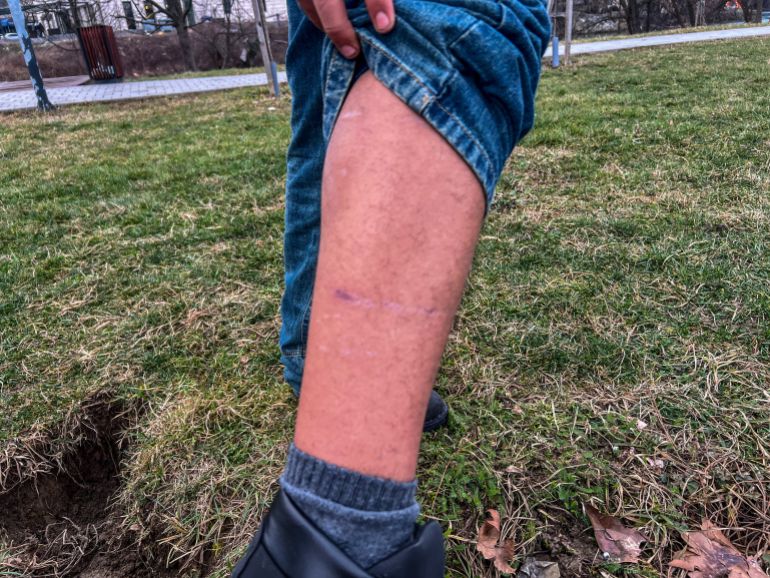
Migrants here say they are denied that opportunity, instead being forcibly sent back across the border: often bruised, stripped of their phones and winter clothing, and forced to start the journey again.
In more than a dozen testimonies to Al Jazeera, migrants spoke repeatedly of being physically assaulted and robbed by Croatian authorities.
“Everyone here has a story,” says 54-year-old Hamid regretfully, his deep brown eyes watering. “People tell me my life should be a movie.”
Hamid, who is originally from Morocco, aims to reach his son Ilyas in France, but he faces a problem: his knees. Two years ago, he said Bosnian police beat him and fractured his knee, leaving him permanently disabled.
He did not want to elaborate on the details of the alleged assault, saying only that he had stepped in when he saw officers attacking another migrant.
Al Jazeera has contacted Bosnian officials but has not received a response.
Hamid has been stranded in the border town of Bihac ever since, sleeping in parks and abandoned buildings. He said he does not socialise with other migrants and prefers to spend his days alone on a park bench, given the alleged attack. He is planning his way to reach Europe. He has been trying for four years.
Perilous journeys
The journey on foot from Bosnia to Croatia is perilous, crossing icy rivers and snow-capped peaks. Most migrants are unsuccessful, attempting the crossing five or six times before landing back in Bihac. Others never make it back, drowning in the Una and Sava rivers or after encounters with Croatian authorities.
In 2025, at least 22 migrants went missing along the western Balkans route – the journey through Greece, Bulgaria, Albania, North Macedonia, Serbia and Bosnia – but this is likely a vast undercount, because the numbers depend on families back home filing missing persons reports and knowing their loved one’s last whereabouts.
In February, Abdul, a 29-year-old from Pakistan, stumbled upon the body of another Pakistani migrant in the woods when crossing into Croatia. He photographed the corpse and left it, needing to hide from Croatian guards. Three days later, he was apprehended about 100km (62 miles) past the border and forcibly returned to Bosnia.
“The Croatian police held me for 24 hours and beat me. They didn’t let me use the bathroom or give me food. Then they took all my money, and they dropped me alone in the woods,” Abdul told Al Jazeera.
At the time of publishing, Croatian authorities had not responded to Al Jazeera’s request for comment.
A vocal supporter of the former Prime Minister Imran Khan, who was arrested on what many rights groups claim are trumped-up charges, he fears retribution from the new government. He spent two months crossing the rugged mountains of Iran by himself before reaching Turkiye, where he worked for a year before setting off again: walking through Bulgaria and Serbia to ultimately reach Bosnia – an increasingly common journey for Afghans and Pakistanis.
At the peak of the refugee crisis during the Syrian civil war, Bihac was crowded with Syrian migrants and refugees in limbo, unable to proceed.
As global conflicts continue to shape migration, this obscure town in the Balkans bears the weight of geopolitics: when the Taliban assumed control of Afghanistan again, the Syrians were gradually replaced by Afghans.
Abuses intensify
Reported pushbacks continue as the EU – under pressure from far-right parties – intends to replace its existing asylum system with the New Migration Pact in June, expediting denials and deportations and increasing biometric surveillance of migrants.
Croatian border guards are reportedly notoriously violent. Migrants and rights groups have documented a pattern of abuse levelled against asylum seekers.
On a frigid December, three Sudanese men, whose names have not been released, were found by Bosnians near the border without jackets or adequate footwear. The men were brought to hospital, where all three had their legs amputated due to severe frostbite. According to the Balkan Investigative Reporting Network, Bosnian police opened an investigation.
Nabil, a 26-year-old from the Atlas Mountains in Morocco, has tried unsuccessfully to cross the border five times on foot through the dense spruce forest. Every time, the Croatian border guards – armed with drones – catch him, beat him with police batons, confiscate his personal items, and drop him back in the woods of Bosnia, gesturing the direction to go. It is a long walk back to Bihac, a journey made more complicated without a phone.
“They broke my phone by smashing it,” Nabil explained, imitating the guards breaking the phone on their knees. “They know we need our phones for maps and calls.”
Croatian police have long faced accusations of abusing migrants, including sexual assault.
Nabil left Morocco about three years ago on his journey to Europe and now struggles to call back home.
“When the police catch you, it feels like everything closes in on you, the whole world,” he said, standing in a park, surrounded by other Moroccans on the move.
Without anywhere to go, many spend their days in the park socialising. At one point, they start a push-up contest on the frozen ground.
Dwarfed in a group of migrants shouting their stories, Mohammed also wishes to speak.
He is a 14-year-old boy from Cairo, travelling alone. His family depleted their savings for him to take a perilous boat from Libya to Turkiye, from where he walked to Bosnia. When he tried to cross into Croatia, he was caught by border guards, who assaulted him with police batons and stole his sneakers. He walked back barefoot through deep snow. A week later, he only has sandals.
Life at temporary reception centres
Across Bosnia, there are camps, formally referred to as Temporary Reception Centres, for people like Nabil, Hamid, Abdul, and Mohammed. The key word is temporary. Bosnia is ranked as one of the poorest countries in Europe, and it offers few opportunities for people on the move.
Due to the complicated political structure of the country, its asylum system is considered non-functional.
These reception centres provide a measure of relief, but migrants complain of poor and inadequate food and prison-like conditions. Consequently, they often prefer rough sleeping to staying at the camps; many opt to live in self-organised communities in squats. In 2021, Bosnian authorities forcibly relocated 250 migrants from an abandoned retirement home to the infamous Lipa camp, about 20km (12 miles) outside of town.
“Life in the camps isn’t so bad, but they’re crowded and noisy, and you can’t breathe. I prefer this,” said Nabil, gesturing to the surroundings in the park. Ducks float in the rivers, and flocks of birds fly overhead.
Due to Lipa camp’s distance from Bihac, it is difficult for the people here to access resources, and they complain of state-enforced isolation. There is no public transport, and they have to walk four hours to reach town.
Hassan, a chatty Palestinian teenager from Jerusalem, is staying at Lipa while travelling with his parents and two older brothers.
The 17-year-old explained how the Croatian police stole his family’s phones and assaulted his brothers. His family will remain in Lipa before trying to cross again: he estimated that they have tried seven or eight times thus far, but are pushed back each time.
The situation in the camps is now expected to deteriorate, as the International Organization for Migration (IOM) is withdrawing this year. Responsibility for the reception centres and migrant welfare will be transferred to Bosnian authorities, who rights groups warn are unprepared to deal with the situation.
A helping hand
Several grassroots organisations have planted roots in the town.
“People come to us in flip flops without jackets in freezing temperatures,” said an activist with No Name Kitchen, which provides humanitarian assistance. She declined to be identified for fear of retribution from authorities.
Their work is not illegal, but migration is highly criminalised, and these groups do not wish to attract unnecessary attention, volunteers explain. They often help by simply handing out warm clothes.
“Bosnia has become Europe’s dumping ground for migrants,” she added.

At first, residents of Bihac were accommodating, but some of that goodwill has faded, replaced by anger at EU officials for not doing more. The nation is still recovering from a bloody war three decades ago. Now, it also bears the weight of Europe’s migration policies – and has few resources to spare.
Yet the migrants overwhelmingly speak positively of Bosnia and its people, who often give rides and clothes to people forcibly returned from the border.
“The people in Bosnia are very kind, unlike Croatia. I’m sure there are good Croatians, but I haven’t met any yet,” says 21-year-old Yaseen from Tunisia, who said he was beaten in the head by Croatian guards to the point of concussion. “They can hit me in my arms, sure, but why do they have to go for my head?”
They all plan to attempt another crossing soon: some will try on foot, others will hide under trucks.
For Hamid, the injured Moroccan man, he tried the crossing again recently, insisting on attempting the journey alone through the mountains. Due to his knees, he slipped and fell on the ice. He went back to Bihac, immobilised with a sprained ankle and sleeping in a crawlspace.
“Everyone has their life; this is my life,” he says. “What can I do?”