
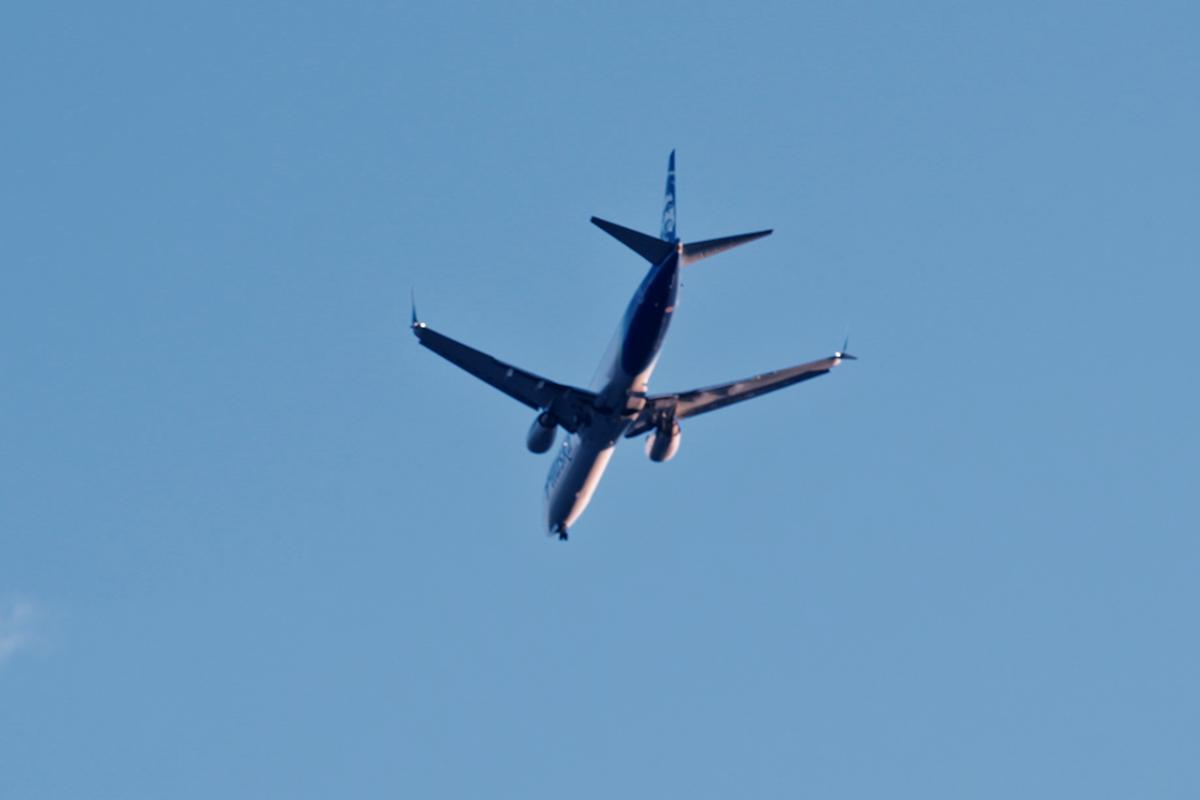
Documentary filmmaker Rory Kennedy likely didn’t want to make Freefall: A Reckoning for Boeing (now on Netflix). The documentary follows her 2022 film Downfall: The Case Against Boeing, which harshly criticized the vaunted American airline manufacturer for brushing aside safety concerns that led to two crashes of its 737 MAX passenger jets. One of the talking heads in Downfall was former Boeing quality control manager John Barnett, whose 2024 death by suicide, which occurred in the midst of a days-long deposition against his ex-employer, sparked Kennedy to helm a second documentary expose of the company. And cynics won’t be surprised to learn that Boeing’s promise to improve itself after the 737 MAX tragedies was naught but a lot of hot air.
FREEFALL: A RECKONING FOR BOEING: STREAM IT OR SKIP IT?
The Gist: “This shit could get somebody killed.” That’s what Barnett told his lawyers after he left his job at Boeing after more than three decades. The former safety expert for the airline had gutted out several torturous years on the job, calling out safety concern after safety concern, and getting reprimanded for it. His reports were brushed aside or deleted, he was moved around to different positions, he was on the receiving end of tongue-lashings from management, and his pay was docked. And he wasn’t alone. We meet a handful of other Boeing safety inspectors who endured the same treatment. One says he filmed a worker doing something wrong, and when he brought the video to management, instead of addressing that worker, they asked for the video to be deleted. These men echo Barnett’s words: There were red flags everywhere, and Boeing corporate brass was more concerned with the bottom line than the possibility of their aircraft crashing.
Kennedy repeatedly returns to Barnett’s story as she pieces together a narrative about how Boeing, once a beacon of American success, fell so far. It began in the mid-2000s, when then-new Boeing CEO Jim McNerney, putting profit above all else, developed a way to trim a $10 billion budget to manufacture the 787 Dreamliner plane down to $5 billion. Manufacturing was outsourced, with different pieces of the plane built in various countries, then shipped to the U.S. to be assembled in a new plant in South Carolina, a state chosen specifically for its dearth of labor unions. Our talking-head safety inspectors share how those airplane sections didn’t fit together well, a product of rampant corner-cutting; one testifies that defective, scrapped parts were brought back to manufacturing facilities and slapped on brand-new planes.
What follows is an infuriating story: Surviving family members of 737 MAX crash victims organizing to stage protests against the company. The Federal Aviation Administration allowing Boeing to settle the 737 claims out of court, the company paying relatively small fines while its CEOs faced no charges for criminal negligence. CEOs leaving Boeing with personal net worths in the hundreds of millions. Former Boeing safety experts breaking down in tears during their interviews as they talk about their futile efforts to prevent tragedies — and as they remember Barnett, whose death inspired them to join the increasingly large pool of Boeing whistleblowers. Barnett was essentially a martyr. But did that ultimately change anything?

What Movies Will It Remind You Of? Kennedy’s The Ghosts of Abu Ghraib is one of the best documentaries about the Iraq War.
Performance Worth Watching: Multiple whistleblowers express their concern for revealing their identities publicly, but also share how Barnett’s death – almost certainly a direct result of his deteriorating mental health in the wake of his ordeals with Boeing – motivated them to speak out.

Our Take: Freefall inevitably repeats some of the content of Downfall, but some of it bears repeating — and it ultimately reflects Boeing’s refusal to admit culpability in its failures, or to change. This, in the wake of the 737 MAX crashes and a 2023 incident in which a “door plug” broke off an airliner mid-flight, and passengers struggled with malfunctioning oxygen masks during the ordeal — a safety issue that Barnett specifically flagged before he left the company. The story obviously didn’t end with the previous documentary, making Freefall a necessary follow-up. And Freefall concludes with little hope that a third Boeing-exposé documentary won’t be necessary. The more things change, the more they stay the same.
Also inevitable is how the films poke at bigger problems with the current state of American late-stage capitalism. In Freefall, Kennedy briefly points out how Boeing corporate lawyers frequently take jobs with the U.S. Dept. of Justice, and vice versa, likely leading to the government’s slap-on-the-wrist penalties for the corporation. It’s also a story of countless American CEOs at corporations of all kinds. They amass great personal wealth as they become heroes to shareholders but villains to the public. Boeing’s pass-the-buck philosophy of denial when faced with legit criticism is an egregiously amoral step beyond the old ask-forgiveness-not-permission approach, and increasingly common with massive conglomerates that are increasingly impervious to punishment, oversight and regulation. It’s not airplanes that are the problem, the movie argues, it’s American corporate culture itself.
Our Call: Freefall is rock-solid investigative journalism. Hopefully a third documentary won’t be necessary, but I dunno about that. STREAM IT.
John Serba is a freelance film critic from Grand Rapids, Michigan. Werner Herzog hugged him once.