
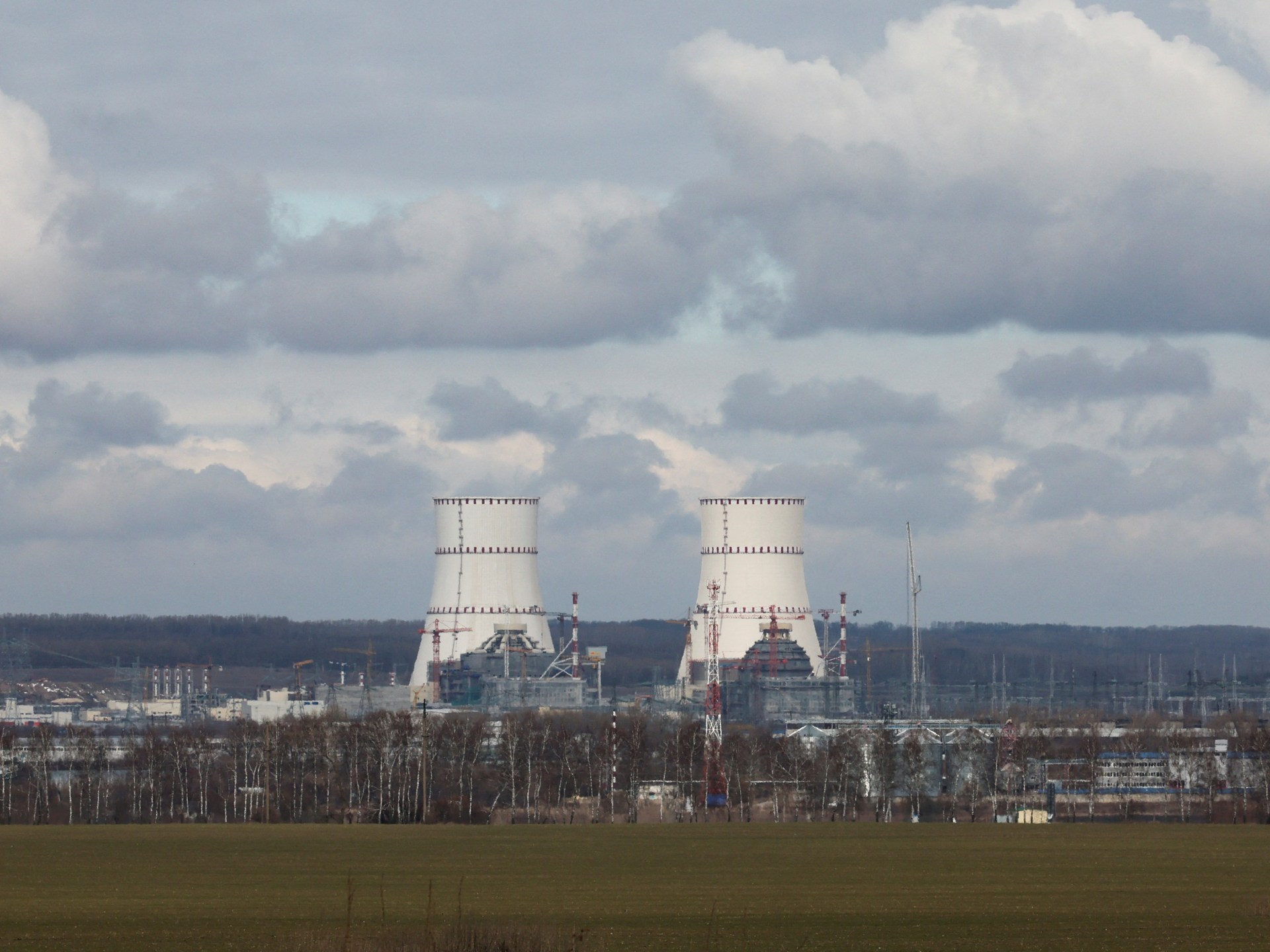
The world often discusses the nuclear threat posed by Russia, but far less attention is paid to the nuclear risks within Russia itself, particularly those posed by ageing nuclear power plants, some of whose reactors are already more than 50 years old.
At the same time, Russia is building nuclear power plants around the world, from Turkiye to Bangladesh, while promoting nuclear energy as a “sustainable” alternative to fossil fuels. Russian President Vladimir Putin regularly meets with foreign leaders to discuss existing and potential nuclear projects. Yet one question remains largely overlooked: what happens to these nuclear facilities when they reach the end of their operational lives?
During the Soviet period, nuclear power plants were built across the USSR, including in Lithuania. As part of Lithuania’s accession to the European Union, the country was required to shut down the two Soviet-built reactors at the Ignalina Nuclear Power Plant. The first reactor was closed in 2004 and the second in 2009. The decommissioning process has proved both extraordinarily expensive and time-consuming. By 2020, the estimated cost had reached 3.3 billion euros ($3.7bn), with only 49 percent of the planned work completed. The process, initially scheduled for completion in 2038, is now expected to continue until 2049.
Russia itself does not seem to be paying much attention to this question. Rosenergoatom plans to decommission 35 reactors. Yet the company’s own estimates point to a funding shortfall of approximately 18.7 billion euros, while the total estimated cost of decommissioning is about 21 billion euros. And these are Rosenergoatom’s own estimates. Actual decommissioning costs are usually significantly higher than initially projected. For example, the cost of decommissioning the former nuclear power plant in Lubmin, Germany, was initially estimated at 1 billion euros but is now estimated at 10 billion euros.
For the time being, however, Russia appears to be postponing the most costly stages of decommissioning. Rather than fully dismantling reactors soon after shutdown, it often places them in long-term “safe” storage, transferring much of the financial and technical burden into the future. Deferred dismantling does not solve the problem, but merely postpones the costly stages of decommissioning, which is particularly concerning given Russia’s existing funding gap.
Environmental NGO Bellona Foundation reports, based on Rosatom’s own projections, that by around 2037, Rosatom’s decommissioning and remediation obligations could exceed its net profit. Moreover, the longer decommissioning is delayed, the greater the associated financial, technical and safety risks are likely to become.
Another major issue is the legacy of radioactive waste. Russia has inherited approximately 774,000 cubic metres of radioactive waste from the Soviet Union. The upcoming decommissioning of 36 reactor units at eight nuclear power plants is expected to generate an additional 800,000 cubic metres of radioactive waste.
Russia already has experience of what happens when industries leave major environmental liabilities behind. In the Kemerovo region, where around half of Russia’s coal is produced, mountains of waste from coal mining scar the landscape. Some of this waste burns, polluting nearby communities. When coal companies go bankrupt, the cost of dealing with what they leave behind can fall to the state and local communities.
But nuclear waste and decommissioned reactors cannot simply be abandoned if the money runs out. The question therefore becomes even more important as Russia’s economic situation deteriorates: what will happen to all these megaprojects if the money needed to maintain, decommission and eventually dismantle them is no longer available?
The countries where Russia is building its numerous nuclear power plants should therefore think about what happens if these projects cannot be maintained or later decommissioned as planned. They need a Plan B in case something goes wrong in Russia. And, as history has repeatedly shown, Russia’s political situation can change unpredictably.
The political consequences of nuclear mismanagement can also be significant. The Chornobyl disaster demonstrated how the Soviet authorities’ attempts to suppress information and downplay the scale of the accident fuelled public distrust and disillusionment, contributing to growing social and political unrest in the late Soviet period. Today, Russia’s continued neglect of nuclear waste and repeated postponement of nuclear plant decommissioning could similarly create conditions for both another environmental catastrophe and growing social unrest, particularly if authorities once again respond to such a crisis with silence or attempts to conceal its scale.
These risks are compounded by Russia’s deteriorating economic situation. In an effort to sustain the war economy, the Russian government has also drastically weakened environmental regulations. National defence is now by far the largest single item in Russia’s federal budget, while environmental protection accounts for only a small fraction of government spending.
Environmental disasters have repeatedly demonstrated that the Russian regime is unwilling to prioritise long-term environmental safety. Russia continues to operate an ageing shadow fleet to transport oil, and the environmental risks associated with that fleet were highlighted by the 2024 Black Sea oil spill, when two ageing Russian tankers released thousands of tonnes of fuel oil into the sea. The spill was described as the Black Sea region’s worst environmental disaster in decades. This broader pattern of environmental negligence raises questions about how the country will manage its ageing nuclear infrastructure and the growing problem of nuclear waste.
These issues should therefore be raised at every international forum where Russia promotes its nuclear industry, such as COPs, where encountering Russian nuclear lobbyists is a common experience. Russia is seeking to secure its place in the future of energy while continuing to use energy as a tool for exerting political influence and power around the world.
All of these issues are particularly concerning because Russia continues to promote its nuclear industry internationally, while independent voices capable of scrutinising its environmental impacts and safety record are increasingly silenced in Russia. As documented in a recent report by the Environmental Crisis Group, repression and the departure of environmental experts and activists have severely weakened Russia’s environmental movement.
Bellona and Greenpeace have been declared “undesirable” organisations in Russia, while EcoDefence, which organised campaigns around environmental and nuclear issues, has been designated a “foreign agent”, and its members have faced criminal prosecution.
Environmental organisations outside Russia continue to draw attention to these risks. EcoDefence in exile, alongside other German activists, campaigns against continued European cooperation with the Russian nuclear industry, which has largely escaped the sanctions imposed on other parts of Russia’s energy sector. According to Vladimir Slivyak, co-chair of EcoDefence, this continued dependence on Russian nuclear technology and services could itself create vulnerabilities that Russia could potentially exploit for sabotage or political pressure.
The result is a shrinking capacity to independently monitor and expose environmental risks inside Russia. This creates a dangerous information gap: a nuclear accident could happen, its scale could be concealed or downplayed by the authorities, and the public could learn the full extent of the disaster only years or even decades later. This is what happened after the 1957 Mayak disaster, when the Soviet authorities concealed the accident and its consequences and did not publicly acknowledge the disaster until 1989, more than three decades later, while thousands of people were left to suffer the long-term consequences of radioactive contamination.
This lack of transparency makes Russia’s nuclear industry an international concern, not merely an energy issue. Its ageing infrastructure, weak environmental oversight and growing reliance on secrecy create risks that can extend well beyond Russia’s borders.
The views expressed in this article are the author’s own and do not necessarily reflect Al Jazeera’s editorial stance.