
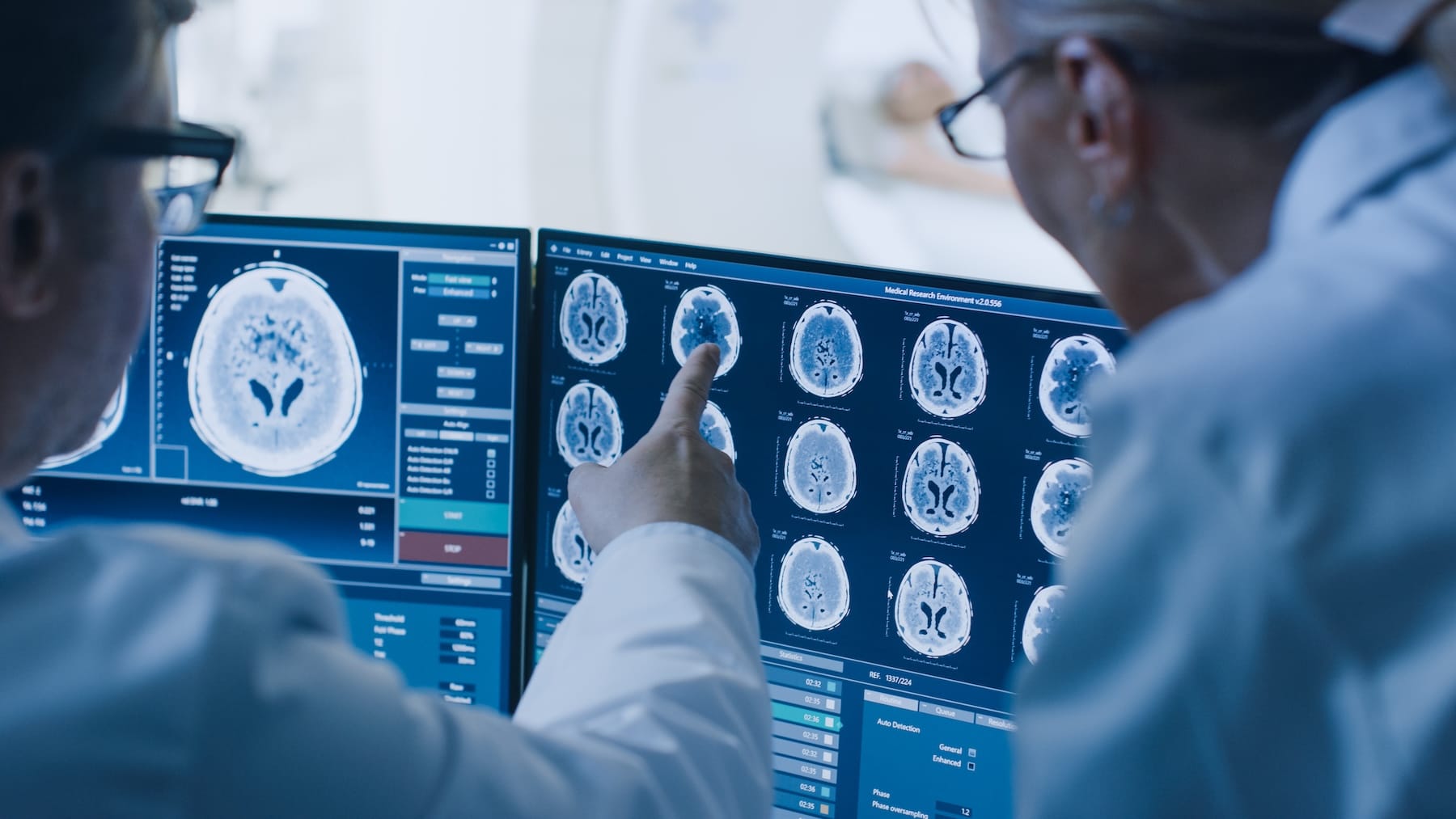
For much of modern history, the brain was viewed as something relatively fixed. Many scientists and physicians believed that cognitive decline was an unavoidable consequence of aging: once the brain began to lose function, there was little that could be done to slow the process.
New research is challenging that assumption. A growing body of evidence suggests the brain is far more adaptable throughout life than previously understood. Like physical fitness, brain health appears to respond to consistent training, lifestyle habits, emotional well-being, and social engagement.
The central idea behind this research is both simple and important. Brain health is not entirely predetermined.
In many cases, it can be strengthened, maintained, and tracked across the lifespan(1-3). This represents a major shift in how researchers think about aging, resilience, and long-term health.
Why Brain Health Has Become a Public Health Priority
People today are living substantially longer than previous generations. Advances in medicine, sanitation, nutrition, and cardiovascular care have extended average lifespan dramatically over the past century.
But longer life raises an important question. Can we
extend not only lifespan, but also the years in which the brain remains sharp, emotionally resilient, and socially engaged?
Researchers increasingly use the term brain health span to describe this goal. Brain health span refers to the number of years a person maintains strong cognitive abilities, emotional balance, relationships, and a sense of purpose(1,4).
This distinction is important, because a long life is not necessarily a healthy or fulfilling one if memory, emotional stability, and independence decline prematurely.
Brain Aging Often Begins Earlier Than Expected
One of the more surprising findings in neuroscience research is that some aspects of brain function begin to change relatively early in adulthood, sometimes as early as the late twenties. These changes may include gradual reductions in processing speed, working memory, mental flexibility, and
blood flow within the brain(5).
This does not mean healthy adults suddenly become cognitively impaired in their thirties. Rather, it reflects the reality that the brain, like the rest of the body, changes continuously across life.
The comparison to physical conditioning is useful here. A person who remains physically inactive for decades will often lose strength, endurance, and mobility over time. In contrast, individuals who maintain regular exercise frequently preserve far more function as they age.
Researchers increasingly believe the brain follows a similar pattern. Daily habits, mental engagement,
sleep quality, stress levels, physical activity, and social connection all appear to influence how well the brain functions over time(3,6).
Brain Health Is More Than Memory
Traditionally, discussions about brain health focused largely on dementia or memory loss. This newer framework takes a broader view. The researchers describe brain health as involving three interconnected dimensions.
1. Clarity
This includes:
- Attention
- Memory
- Problem-solving
- Mental flexibility
- Clear thinking
2. Connectedness
This refers to:
- Social relationships
- Community engagement
- Meaningful interaction
- A
3. Emotional Balance
This includes:
- Stress regulation
- Emotional resilience
- Anxiety and depression management
- Overall psychological well-being
Notably, these areas influence one another constantly. Chronic loneliness, poor sleep, depression, and prolonged stress can negatively affect cognition and emotional health, while strong social relationships and a sense of purpose may improve resilience and mental performance(3,7).
Rather than operating as isolated systems, these domains function together as part of an integrated network that shapes
The Brain Retains the Ability to Change
A central concept in the paper is neuroplasticity, the brain’s ability to adapt and reorganize itself in response to experience, learning, and behavior. For decades, many people assumed the adult brain became largely “hard-wired” after childhood. Research now suggests otherwise(6).

Neural pathways strengthen through repeated use. Skills and habits that are practiced regularly tend to become more efficient over time, while underused pathways may weaken.
A useful way to think about neuroplasticity is to imagine a transportation network. Routes that are used frequently become faster and more efficient. Routes that are rarely used deteriorate. At the same time,
new connections can still be built.
This capacity for adaptation helps explain why people can continue learning, improving emotional regulation, developing new skills, and recovering function even later in life. Although aging does affect the brain, researchers increasingly reject the idea that decline is entirely fixed or irreversible(6,8).
Measuring Brain Health Like We Measure Physical Health
Most medical tests identify disease after damage has already occurred. Blood pressure, cholesterol levels, and cardiac imaging are all designed to detect risk or decline. The researchers argue that brain health needs a similar approach. Not simply diagnosing disease, but tracking function over time.
To address this, they developed a multidimensional assessment called the BrainHealth Index, or BHI.
Unlike traditional cognitive testing, which often compares one person against population averages, the BHI focuses heavily on change relative to an individual’s own baseline.
In practical terms, the question becomes less about whether someone performs “better” than others and more about whether their
brain health is improving, remaining stable, or declining over time(2).
This approach mirrors how physical fitness is commonly evaluated. Progress is typically measured against a person’s previous performance, not against elite athletic standards.
A Broader View of Brain Performance
The BrainHealth Index attempts to capture multiple dimensions of daily functioning, including:
- Cognitive performance
- Emotional well-being
- Sleep quality
- Social engagement
- Lifestyle habits
- Purpose and meaning
The researchers argue this broader framework is essential because memory alone does not fully reflect real-world brain function. A person may perform adequately on a memory test while still struggling with chronic stress, social isolation, emotional exhaustion, poor sleep, or loss of motivation.
These factors can significantly influence how people think, function, and cope with daily life(2,3).
The Study Followed Nearly 4,000 Adults
The researchers tracked 3,966 adults between the ages of 19 and 94 over a three-year period. Participants used an online brain health platform that included cognitive training exercises, lifestyle guidance, habit tracking, educational modules, and coaching sessions.
Much of the training focused on strengthening executive function, a set of mental skills involved in attention control, planning, decision-making, emotional regulation, and behavioral self-control. Executive function is sometimes described as the brain’s management system because it helps coordinate thoughts, actions, and emotions toward long-term goals(8).
What the Researchers Found
Over time, many participants demonstrated measurable improvements in cognitive clarity, emotional well-being, social connectedness, and overall brain health scores. Improvements occurred across a wide age range, including both younger and older adults. Participants who began with lower scores often showed the greatest gains(2).
The findings challenge the assumption that
lower cognitive performance is necessarily permanent or unchangeable. Instead, they support the idea that the brain retains substantial capacity for adaptation throughout adulthood.

Small Daily Behaviors May Matter More Than Occasional Intense Efforts
Participants who engaged more consistently with the program generally showed greater improvement. The platform was intentionally designed around short, manageable activities such as brief training sessions, small habit adjustments, and coaching interactions.
This reflects a principle widely seen in health science, which is lasting change is usually driven by repeated behaviors practiced consistently over time. The same principle applies in physical conditioning. One strenuous workout rarely changes long-term fitness, while regular habits practiced over months and years often matter far more.
The researchers suggest brain health may operate similarly(2,6).
The Importance of “Self-Agency”
One of the study’s most interesting concepts is self-agency, the belief that a person can influence their own brain health and functioning. This mindset may have powerful effects on behavior.
When individuals feel powerless, they are often less likely to engage in healthy routines or sustained effort. In contrast, people who believe improvement is possible are generally more likely to remain engaged,
practice healthy habits consistently, and persist through setbacks(2).
The researchers propose that this creates a reinforcing cycle in which people learn useful cognitive strategies, gain confidence, apply those strategies more consistently, and experience measurable improvement over time.
A Shift Away From the “Inevitable Decline” Model
The paper argues that medicine has historically focused more on treating brain disease after decline occurs than on promoting lifelong brain health beforehand. The authors advocate for a more preventive model that encourages people to strengthen cognitive resilience early, maintain emotional health, prioritize sleep and exercise, and foster strong social relationships throughout life(1,3).
They compare this shift to the transformation that occurred in cardiovascular medicine decades ago, when prevention became just as important as treatment.
Important Limitations of the Study
The researchers also acknowledge several important limitations. This was not a randomized controlled trial, which means the study cannot prove with certainty that the intervention itself caused all observed improvements. Other factors, including motivation, personality, or preexisting
interest in self-improvement, may have contributed.
The participant group was also relatively well educated, which may limit how broadly the findings apply to other populations. In addition, long-term participation is a challenge for many online health programs.
Still, the researchers argue that even moderate participation across large populations could produce public health benefits if these approaches continue to prove effective(2).
A New Way of Thinking About Brain Health
The researchers are not claiming that aging can be stopped or that people can prevent every neurological disease. Their argument is more measured and, in many ways, more compelling:
Brain health is dynamic. It responds to how we live.
Sleep, exercise, emotional resilience, cognitive challenge, stress management, social connection, and purposeful activity all appear to shape brain function across time(3,6).
The broader implication is significant. Brain health may not simply be the absence of disease. It may be something that can be actively cultivated throughout life. That idea has the potential to reshape how medicine, public health, and individuals think about aging itself.
If you’re looking to keep your brain functioning at its best, you’ll want to consider
The Ultimate Brain Stack contains
(5,000 mg of creatine and 220 mg of sodium) and
(our world-class nootropic comprised of 10 powerful brain-boosting ingredients) to provide a full range of nutrients to support a high-performance brain.


References:
- Livingston G, Huntley J, Sommerlad A, et al. Dementia prevention, intervention, and care: 2024 report of the Lancet Commission. Lancet. 2024;403(10440):2105-2199.
- Chapman SB, Spence JS, Aslan S, Keebler MW. Enhancing innovation and underlying neural mechanisms via cognitive training in healthy older adults. Front Aging Neurosci. 2021;13:683915.
- National Academies of Sciences, Engineering, and Medicine. Preventing Cognitive Decline and Dementia: A Way Forward. Washington, DC: National Academies Press; 2017.
- World Health Organization. Optimizing Brain Health Across the Life Course. Geneva, Switzerland: WHO; 2022.
- Salthouse TA. When does age-related cognitive decline begin? Neurobiol Aging. 2009;30(4):507-514.
- Park DC, Bischof GN. The aging mind: Neuroplasticity in response to cognitive training. Dialogues Clin Neurosci. 2013;15(1):109-119.
- Holt-Lunstad J, Smith TB, Baker M, Harris T, Stephenson D. Loneliness and social isolation as risk factors for mortality. Perspect Psychol Sci. 2015;10(2):227-237.
- Diamond A. Executive functions. Annu Rev Psychol. 2013;64:135-168.