
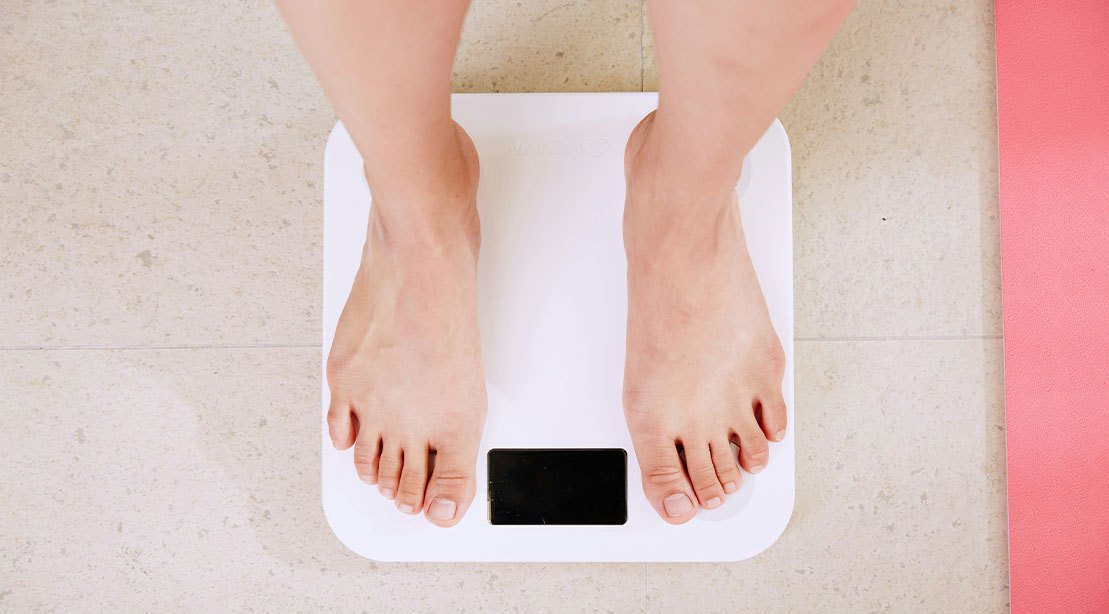
Losing weight is relatively simple: consistently consume fewer calories than your body expends. Losing primarily body fat while preserving hard-earned muscle, however, requires a more strategic approach. When calories are restricted, the body does not automatically select only stored fat to meet its energy needs. Depending on how you diet and train, some of the weight you lose may come from muscle tissue. The goal, therefore, is not simply to make the number on the scale decrease. It is to create an environment that encourages the body to use stored fat while giving it compelling reasons, and the nutritional resources, to retain muscle. The most important tools for accomplishing this are a well-designed resistance-training program, sufficient protein, a moderate calorie deficit, properly managed cardiovascular exercise, and consistent daily movement.
Continue Training for Muscle Growth
One of the biggest mistakes people make during a fat-loss phase is changing from a structured hypertrophy program to a collection of high-repetition circuits designed primarily to create a “burn” or make them sweat. Sweating more does not necessarily mean you are burning more body fat, and feeling a muscle burn does not guarantee that a workout is providing an effective muscle-preserving stimulus. Your body needs a reason to retain metabolically costly muscle tissue while calories are limited. Progressive resistance training provides that reason.
For most experienced lifters, training four or five days per week is a practical starting point. The program should continue to emphasize hypertrophy, using sufficient training volume, appropriate intensity, good technique, and sets performed relatively close to muscular failure. You do not need to take every set to absolute failure, but routinely ending challenging sets with approximately one to three good repetitions remaining is appropriate for many exercises (1).
Training volume must also be purposeful. More is not automatically better. Effective volume consists of challenging sets that meaningfully stimulate the target muscles. “Junk volume,” which are extra sets performed with inadequate effort, poor execution, or loads that are not sufficiently challenging, creates fatigue without providing a proportionate hypertrophy stimulus. During a calorie deficit, when recovery capacity may already be reduced, accumulating unnecessary fatigue is particularly counterproductive.
Try to maintain as much of your normal training performance as reasonably possible. Some decline may occur as the diet progresses, especially when you become leaner, but strength should not be surrendered unnecessarily. If you could perform ten controlled repetitions with a particular load before starting the diet, continue working to stay near that performance rather than automatically switching to very light weights and endless repetitions.
Rest Long Enough to Perform
Short rest periods are often promoted as being better for fat loss because they elevate heart rate and make the workout feel harder. That may make a lifting session more metabolically demanding, but it can also compromise the quality of subsequent sets. If you begin another set after only 30–60 seconds, local muscular fatigue and incomplete energy-system recovery may force you to use less weight or complete fewer repetitions. Over the entire workout, this can reduce the productive volume and mechanical tension you can achieve.
For most hypertrophy-focused training, resting approximately two to three minutes between challenging sets is a better general approach. Longer rest periods are especially useful for demanding multijoint exercises such as squats, presses, rows, and deadlift variations. Research comparing one- and three-minute rest periods in resistance-trained men found that the longer-rest group achieved better strength gains and superior hypertrophy at some measured sites. Longer rest periods appear beneficial largely because they help lifters maintain training performance and productive volume (2).
Shorter rest periods may still be appropriate for some isolation exercises, warm-up sets, or time-efficient supersets. Nevertheless, your primary goal during resistance training should be to produce a high-quality muscular stimulus and not to transform every weight-training session into cardio.
Use a Moderate Calorie Deficit
A calorie deficit is required to lose body fat, but a larger deficit is not always better. Severe restriction can reduce training performance, impair recovery, increase hunger, and raise the risk of losing lean tissue. A deficit of approximately 15–25% below maintenance calories is a reasonable starting range for many people. Someone maintaining body weight on 2,500 calories, for example, might begin with approximately 1,875–2,125 calories per day. The appropriate starting point within that range depends on body-fat level, training experience, time available, and individual tolerance.
Leaner individuals and those concerned with maximizing muscle retention should generally favor the more conservative end. Rate of weight loss should also be monitored. If body weight is dropping rapidly while strength, recovery, mood, and sleep are deteriorating, the deficit may be too aggressive. A good goal is to lose weight at a rate of ~0.5-1% of bodyweight per week .

Prioritize Protein Every Day
Protein supplies the amino acids needed to repair and maintain muscle tissue. Protein needs become especially important during energy restriction because the body is operating with fewer total calories and muscle protein synthesis may be compromised.
A recent systematic review and meta-regression examined protein intake and changes in fat-free mass among energy-restricted, resistance-trained individuals (3) . The authors found a greater than 97% probability of a positive linear dose-response relationship between protein intake and favorable changes in fat-free mass. The association was stronger when protein was expressed relative to fat-free mass, during interventions lasting longer than four weeks, among leaner participants, and in men. The authors appropriately described the findings as exploratory because of substantial differences among the included studies (3).
A practical target for many resistance-trained individuals is approximately 2.0–2.7 grams of protein per kilogram of body weight per day. Those who are already very lean, using a larger deficit, or completing a demanding training program may benefit from the higher end. People with substantial excess body fat may find it more appropriate to calculate intake using goal weight or fat-free mass.
Distribute protein across three to five daily meals, with each meal containing a meaningful serving of high-quality protein. Total daily intake remains the priority, but consistent distribution makes the target easier to reach and gives the body repeated opportunities to support muscle protein synthesis.
Use Cardio as a Tool—Not a Punishment
Cardio can increase energy expenditure, support cardiovascular health, and allow you to eat slightly more while maintaining a deficit. But excessive cardio can interfere with recovery and resistance-training performance, particularly when it is added abruptly. A practical starting point is four weekly sessions of approximately 25 minutes at a low-to-moderate intensity. This should feel sustainable rather than exhausting. Adjust gradually based on progress instead of beginning with the maximum amount you can tolerate.
Daily steps offer another low-fatigue way to increase energy expenditure. Nine to ten thousand steps per day is a reasonable starting target for many people. A more individualized method is to track your normal daily steps, excluding deliberate cardio, and increase that baseline by approximately 20%. This creates additional activity without turning every day into another demanding workout.
Build Better Rewards Into Your Plan
Successful fat loss does not require food to become joyless. In fact, an overly rigid diet that eliminates everything enjoyable may be harder to sustain than a structured plan that includes satisfying foods in appropriate portions. This is where keeping a healthy reward in your nutritional toolbox can help. Linear Bars provide a convenient option for people who want something that tastes indulgent while still making food quality and intentional eating part of the decision. They offer a way to enjoy great taste without abandoning the structure of your nutrition plan, while providing 20g of complete protein and up to 10g of fiber per bar.
A Linear Bar is not a substitute for an overall diet built around lean proteins, fruits, vegetables, whole grains, and other minimally processed foods. Instead, it can complement that foundation as a planned snack, a convenient option during a busy day, or a satisfying reward after a productive training session. As with any food, account for it within your daily calorie and macronutrient targets.
The winning strategy is not starvation, marathon cardio sessions, or workouts designed only to make you sweat. Preserve muscle by continuing to train hard and intelligently, resting long enough to perform, consuming sufficient protein, using a manageable calorie deficit, and increasing activity in a sustainable way. Then make the process easier to maintain by including foods made with quality ingredients that you genuinely enjoy, including a great-tasting Linear Bar.

References
- Refalo, M. C., Helms, E. R., Trexler, E. T., Hamilton, D. L., & Fyfe, J. J. (2023). Influence of resistance training proximity-to-failure on skeletal muscle hypertrophy: A systematic review with meta-analysis. Sports Medicine, 53(3), 649–665. https://doi.org/10.1007/s40279-022-01784-y
- Schoenfeld, B. J., et al. (2016). Longer interset rest periods enhance muscle strength and hypertrophy in resistance-trained men. Journal of Strength and Conditioning Research, 30(7), 1805–1812. https://pubmed.ncbi.nlm.nih.gov/26605807/
- Refalo, M. C., et al. (2025). Effect of dietary protein on fat-free mass in energy-restricted, resistance-trained individuals: An updated systematic review with meta-regression. Strength and Conditioning Journal. https://doi.org/10.1519/SSC.0000000000000888
Muscle & Fitness and JW Media, LLC were not involved in the creation of this sponsored content. The views and claims expressed do not necessarily reflect those of Muscle & Fitness or its editorial staff.