
Every year since 2001, the Mr. Olympia’s iconic main event “finals” begin with the presentation of colors by members of a United States Honor Guard unit, followed by the singing of the national anthem. This tradition, started by inaugural IFBB Pro League President Ben Weider, serves as a reminder to the audience watching, the athletes competing, and even those that make the Olympia happen that the biggest bodybuilding show in the world thrives thanks in part to the support and protection of those that wear the nation’s uniform.
The connections between the military and the Olympia only begin there. The Olympia has offered thousands of free tickets to active duty service members and has even been the stage for several Olympia competitors who have served in the military.
Olympia President Dan Solomon shares, “Ben laid the groundwork for a meaningful connection between bodybuilding and the military. Since his passing we have welcomed thousands of active duty men and women to Olympia Weekend, while continuing to tell their stories here in our Fit to Serve section. We’re always exploring new ways to show our gratitude.”
Solomon is one of many industry leaders today that Weider inspired and mentored. In his current role, Solomon proudly stands alongside M&F Military Editor and Air Force veteran Rob Wilkins to lead the charge of honoring those that serve and protect the American people.
There has always been a quiet, yet consistent and passionate relationship between bodybuilding and the military. While serving one’s country is a more noble path, there are other commonalities between those who serve and those who step onstage. Both commitments require extreme discipline, attention to detail, consistency, and a strong focus on physical preparation; service members for readiness and bodybuilders for competition. What observers may see for moments is founded on months and even years of invisible labor. In their own ways, they both also inspire people to focus on self-improvement and serve as ambassadors for wellness.
If you want to trace these connections to their roots, you have to go much further back than when the previously mentioned athletes stepped on the Olympia stage or even well before 2001. You would actually have to go all the way to the founding of the IFBB itself and its original leader
.
Ben Weider’s Service to Canada and Sport
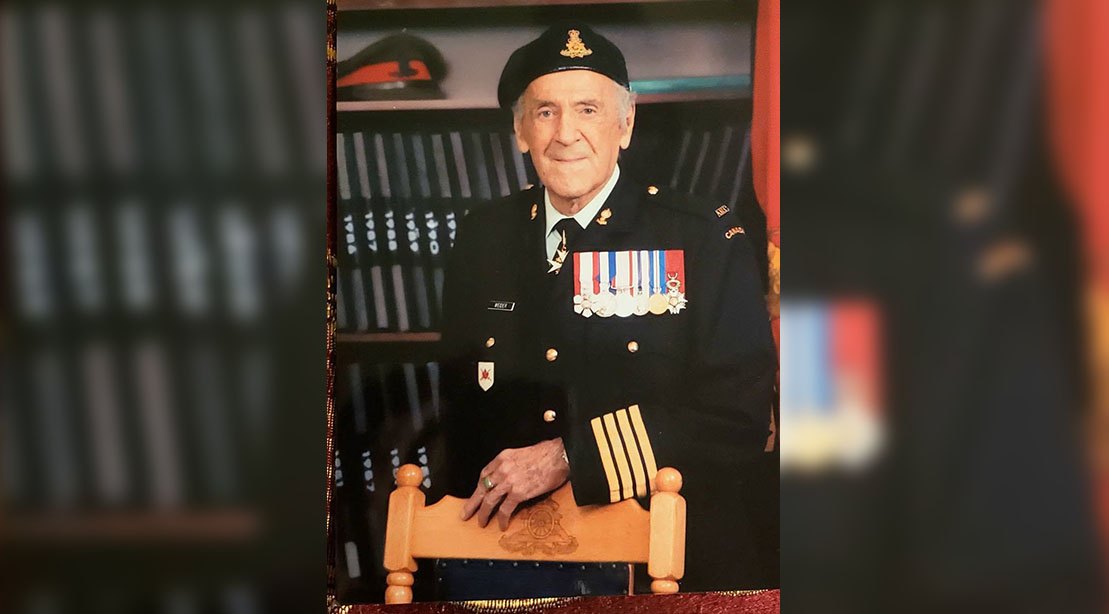
Weider’s Wikipedia page lists many roles and titles he held throughout his life, but the first one is “Canadian soldier.” The Montreal, Quebec native enlisted in the Canadian Army in 1942 at the height of World War II, serving in the 6th Duke of Connaught’s Royal Canadian Hussars, in which he did intelligence work as a member of the Canadian Intelligence Corps.
After he exited the Canadian military, Weider and his brother Joe began building the bodybuilding empire that we all know today. Joe went on to create several fitness magazine titles, including Muscle & Fitness, and Ben served as the first IFBB president. While both Weider brothers dedicated their lives to promoting bodybuilding and fitness to the masses, Ben’s personal appreciation for service always stayed with him and was at the forefront of his mind.
Wilkins served as an executive assistant to Weider for several years and recalled how proud Weider was of not only his time in the military but appreciative of others who made the same commitment.
Wilkins said, “With Ben being a military person himself, he really understood the importance of showing support and recognizing military people.”
Later in his life, Weider received several honors for his service and endeavors, including being made a Member of the Order of Canada in 1975 (later promoted to Officer in 2006), a Knight of the National Order of Quebec in 2000, and in 1998 he was named Honorary Lieutenant Colonel of the 62nd (Shawinigan) Field Artillery Regiment, RCA. By 2005, he was elevated to Honorary Colonel of that unit. Weider was even nominated for the Nobel Peace Prize in 1984 in recognition of his international humanitarian work, youth fitness promotion, and global sports diplomacy.

2001 and an Olympia Tradition
Following the terrorist attacks on the United States on September 11, 2001, Weider consulted with Wilkins and others about the idea of giving tickets to service members and having the Honor Guard present the colors at that year’s Olympia. Wilkins agreed it was a good idea and played a supporting role in making those ambitions happen. The original concept was for 200 tickets to be offered to local bases around Las Vegas, where the Olympia was held. Ultimately, Wilkins confirmed that over 1,200 tickets were distributed, and they were well received by the troops.
Being in attendance at the 2001 Olympia and seeing the impact of those decisions for himself has stayed with Wilkins ever since.
“To this day, there was never anything more electrifying for me than when they would chant ‘USA, USA’.”
The goodwill gesture towards the nation’s heroes has been repeated every year since. Weider passed away on October 17, 2008 at the age of 85, but his presence and impact on the world can still be seen and felt today in many ways, including the traditions he started in 2001. 2026 will mark the 25th anniversary of both the ticket program and the presentation of colors on the Olympia stage. Wilkins is proud of the milestone and feels it has been a positive impact on the weekend’s festivities. He also expressed gratitude for Olympia owner Jake Wood and Solomon for keeping Weider’s noble gesture alive.
“I’m honored that they still recognize the importance of continuing the tradition.”
Since 2021, Muscle & Fitness has also documented nearly 140 stories of service members and first responders through Fit to Serve, which was co-founded by Wilkins and Solomon and is now considered the leading military-fitness-focused column in the world.
No gesture can ever match the measure of devotion offered by service members. But bringing their honor to the Olympia stage does more than express gratitude. It affirms a shared ideal. Both defenders of freedom and elite physique athletes hold the same foundational virtues: uncompromising discipline, silent sacrifice, and the relentless pursuit of human potential. These common bonds are why those who serve and those who compete will be connected for many more generations to come.