
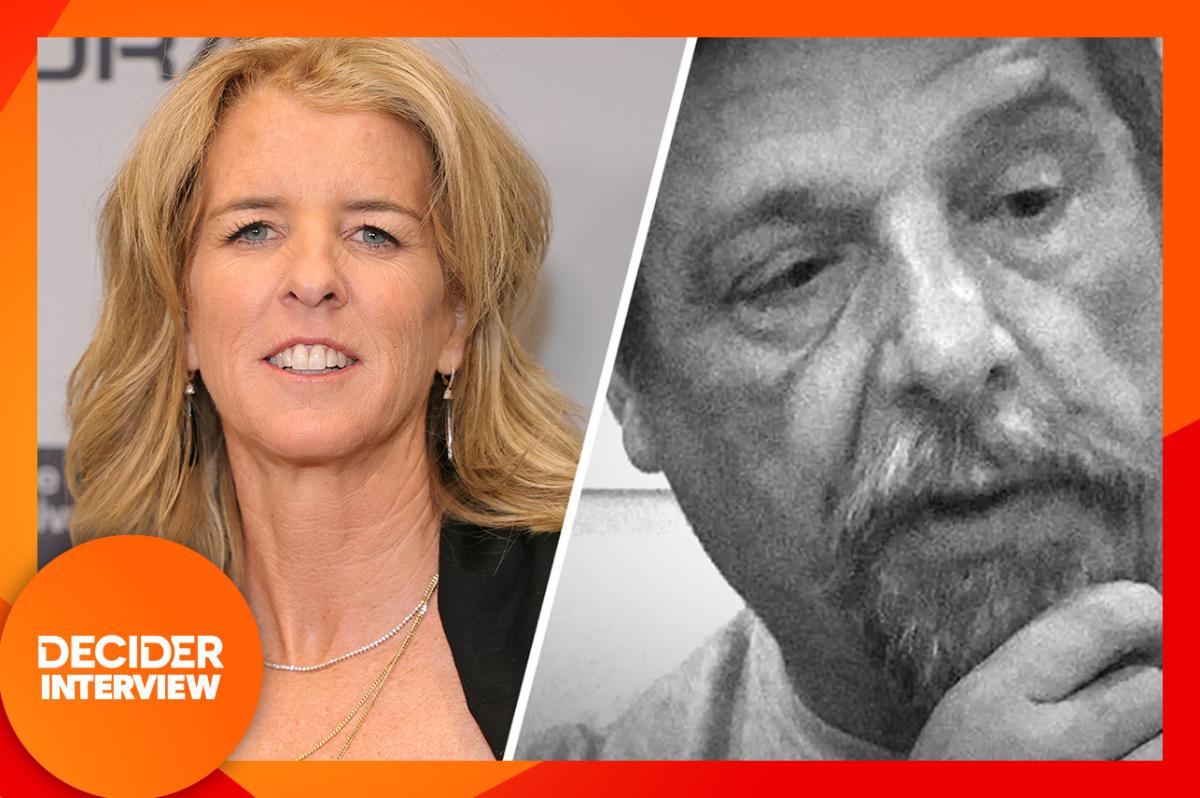
After the release of her 2022 Netflix documentary, Downfall: The Case Against Boeing—which detailed a company culture shift at from “safety first” to corner-cutting profit-chasing, leading to the faulty 737 Max aircraft that fell out of the sky, twice—director Rory Kennedy had hope that Boeing would shift focus back to safety and quality.
“It seemed like they were doing that for a period,” Kennedy told Decider, in a recent Zoom interview. “Then the 737 Max went back in the air after it was grounded. I started seeing the headlines again.”
Headlines like wheels falling off of planes during takeoff. Hazy smoke filling cabins mid-flight. A panel flying off an Alaska Airlines jet mid-flight, exposing passengers to the open sky.
And then, Boeing whistleblower John Barnett—featured prominently in Kennedy’s Downfall doc—was found dead, in the middle of his depositions to testify in court against Boeing.
“That, more than anything, incentivized me to revisit this story,” Kennedy told Decider. “I had many hours of recordings of him that I had done over the years, and really felt like his story deserved to be told.”
And so, Kennedy and her producing partner, Mark Bailey, made a follow-up film, Freefall: A Reckoning For Boeing, which began streaming on Netflix today. (Kennedy is the youngest child of the assassinated former U.S. Senator Robert F. Kennedy, but unlike other members of her family, she has stayed away from politics and pursued a documentary filmmaking, including 2014’s Last Days in Vietnam and 2026’s Queen of Chess.) The director spoke to Decider about her new film, the “suspicious” death of John Barnett, and the two Boeing-made aircrafts she personally will never fly on.

DECIDER: Why did you and your producing partner Mark Bailey decide to make this follow-up film to your 2022 film Downfall? Were you approached by Netflix, or approached by someone else, to do so?
RORY KENNEDY: As you mentioned, we had made Downfall: The Case Against Boeing, which focused on the 737 Max crashes that killed 346 people, which Boeing admitted responsibility for. Since then, Boeing has repeatedly assured airlines, flight crews, Congress, and the flying public that Boeing’s safety and quality problems are being corrected—that they’re focused on safety over profits. It seemed like they were doing that for a period. Then the 737 Max went back in the air after it was grounded. I started seeing the headlines again [about] airline maintenance issues, whistleblower disclosures, regulatory actions taking place, rejected aircrafts—stories about landing gear falling off of airplanes, smoke in cabins, engines lighting on fire. Really scary stuff.
Then of course, John Barnett, who was a whistleblower—and who I had known from Downfall—died under suspicious circumstances, when he was giving a deposition about his experiences with Boeing. That, more than anything, incentivized me to revisit this story. He had committed so much of his life to trying to protect the public, and help us be aware of what was happening inside the company. I had many hours of recordings of him that I had done over the years, and really felt like his story deserved to be told.
The main takeaway I got from Downfall was that quality took a backseat to chasing stock prices at Boeing, which led to these 737 Max crashes. What thesis did you go into with this film? Was it mostly about telling John’s story? Was it something else?
I would say that that Downfall was focused about a single airplane model, the 737 Max, and that this film, Freefall, is much more about corporate failure—basically, a corporation in freefall.

Tell me about meeting John Barnett, knowing John, and speaking to him for for Downfall.
I got to spend a good amount of time with John over the years. When he died, I was in immediate touch with his family. Not that I can relate to their very sad journey, but I was certainly crestfallen when I heard about his death. John’s story is somebody who worked at Boeing, loved Boeing, and was really well-respected and celebrated at Boeing, during the years that Boeing focused on quality and safety. When things shifted, he became increasingly ostracized. He talked about [what it was like] being the hero. and then going into the office one day and everybody hates you, and you have no idea why.
It was because he was the person who was saying, “This bolt doesn’t fit into this hole. There’s scrap parts being used in this airplane.” Pretty basic safety concerns. But those safety concerns slow down production, and slowing down production costs Boeing money. When the focus became shareholder profits, people like John got in the way of that, and became an irritant.
The film follows his story historically, but also looks at the more current story of the investigation of what happened to him, and what those circumstances were. We were able to get exclusive access to his deposition, which plays a significant role in the film. In that deposition, for example, he talks about his findings that a lot of the oxygen masks didn’t work on the airplanes. You hear the Boeing lawyer push back and say, “There was no real study. We don’t really know that to be true.” He says, “Well, actually, because I voiced that, we pushed the company to do a study. There was a study done, and in the first incident, 15 percent of oxygen masks didn’t work. But when we did the larger study, 25 percent of the oxygen masks didn’t work.”
Then we have this scene in the film inside the Alaska Airlines incident, when the window blows out. They’re at 10,000 feet—thank god they’re not at 30,000, because at that level it would have been catastrophic. Many of the oxygen masks don’t work. So you see this sort of tracking of his complaints and him saying, “This might not happen this month or next month, but down the line, you’re going to see these issues manifest.” And of course, we did, right in front of our eyes.

There could have been another version of this movie that was more like true crime documentary. There is a section of the movie dedicated to the investigation of his death, but it’s a small portion of the film. Why did you opt to lean away from the true crime approach?
The story was unfolding in real time. I don’t want to reveal too much about what that investigation shows. I do think that what his lawyer says at the end of the film—that Boeing may not have been holding the gun, but they are responsible for John’s death—resonates. I’m curious what audiences will feel about that, over the course of the film. John dedicated his life to holding Boeing responsible for their actions. This was a company that he admired so much and [always said] that he doesn’t want Boeing to fail. What he wants more than anything, is for Boeing to go back to focusing on excellence and safety. That was their North Star, historically, and it led them to becoming one of the greatest companies in American history.
What we’re seeing is that when a company is so willing to sacrifice that North Star for purely profits, the company itself falters. And actually, even as it’s focused on profits, the company is not doing well, financially. [It] should be reason enough that these airplanes are not as safe as they should be, but it’s also a short-sighted way to run a company. It certainly does well for the handful of CEOs who are getting paid out hundreds of millions of dollars. As one of our interviewees say in the film, Boeing itself is in free fall, but its CEOs —the people who’ve run the company—are some of the richest people in the world.
I think there are a lot of viewers, including myself, who will go into this movie convinced that John did not take his own life—that Boeing had him killed. What do you hope viewers will take away from the section of the movie about John’s death?
I would rather not get into it, because I’d rather it not be a spoiler, honestly. Even though this [interview] comes out after the film is on Netflix, people may not have seen it. I’d rather not tell exactly what is revealed in the film, but speak to what his story represents. Which is why I’m really focused on his efforts and struggle to hold Boeing accountable. Because of John, so many other whistleblowers have come forward and said, “Not only is Boeing not focused on safety as they had promised after the Max crashes, but the situation has gotten worse.” What we found in talking to all these whistleblowers who came forward because of John— across many factories, building many different kinds of airplanes, fixing all sorts of different aircrafts—they were all saying the same thing. Scrap parts being used in aircrafts. Complaints about safety where people were punished, when they complained about safety. Endless examples of very specific situations that could compromise an airplane in flight at a catastrophic level. These are the stories that John committed his life to.
The film does advertise itself as being about John’s death, which was suspicious, so I feel like it’s fair to ask about that aspect. Without revealing too much, spoiler-wise, did you get the sense that John’s family and friends believed the conclusion that is revealed in the documentary?
Obviously I’ve made a film with other people’s voices in it that are first-hand accounts. I feel good about quoting things that we hear in the film, but I don’t feel comfortable talking for other people, and what their opinion is about things. That’s for them to speak to. Whatever your belief by the end of the film, in terms of what happened to John, Boeing is responsible for his death. I think that almost everybody who I know believes that.

You said in your director’s statement that after the first film, you were hopeful that Boeing would make improvements on quality and safety. Do you feel that same hope this time? Do you personally feel safe flying on new Boeing planes?
What we’re finding out in the world today is that corporations, institutions, governments are only as good as the people around them are, and the demands that people make of those people. I’m really happy that I made this film. I think it’s important for a whole range of reasons, and I think its timely. For things to change, people have to watch the film, understand what’s going on, and also take action themselves—whether that’s writing letters to Boeing, writing letters to the FAA, writing letter to your congressperson or senator, and voting this fall. Look at [candidates] who have a history of enforcing regulatory agencies, and giving them the support that they need, like the FAA, to do their job. That’s when change can really happen.
You can also look at what kind of plane you’re flying and make some smart choices in terms of airlines and aircraft. JetBlue doesn’t fly Boeing, for example. So if you’re interested in not flying Boeing, that would be a really good option.
Is that what you do—avoid Boeing planes?
If I can fly Airbus, I’ll fly Airbus over Boeing. I won’t personally fly on a 737 Max or a Dreamliner.
Freefall: A Reckoning for Boeing is now streaming on Netflix.