
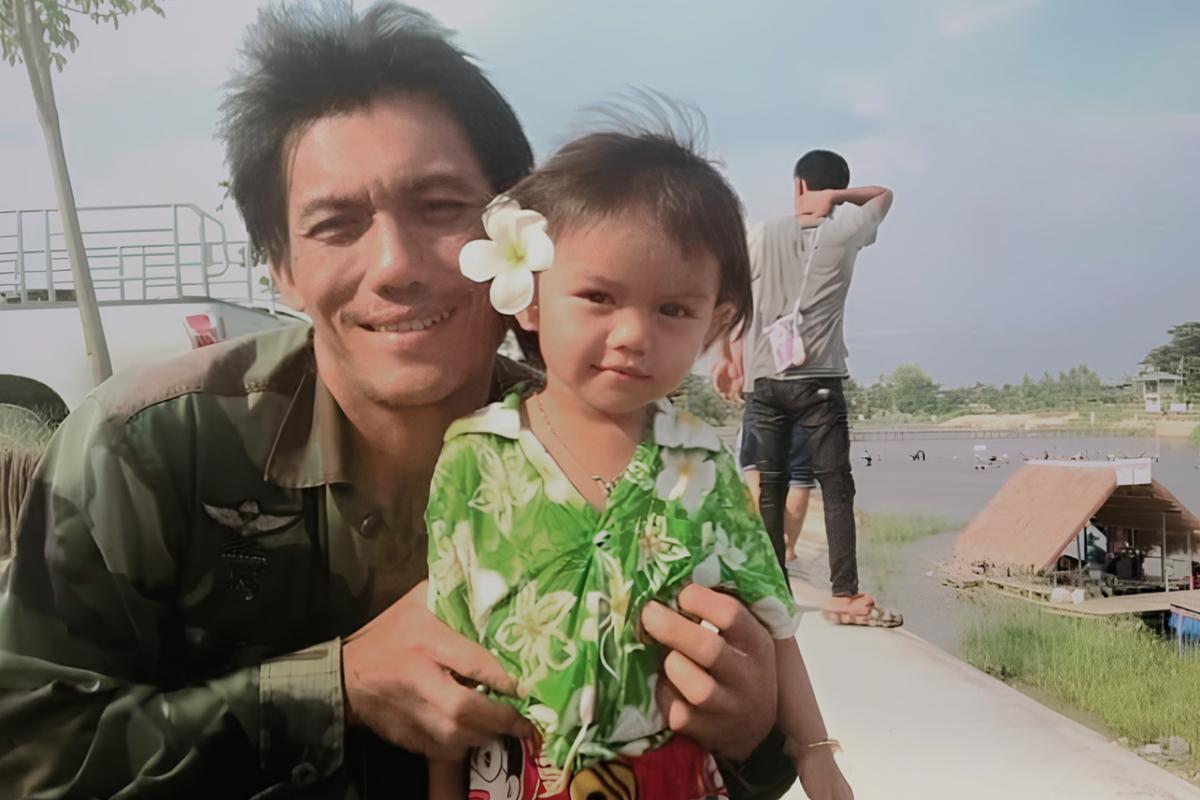
Netflix’s true crime cameras turn to Thailand for Chompoo: Lost and Forgotten, a troubling documentary about the role news media and social media played in the investigation of the abduction and murder of a child. In 2020, three-year-old Orawan “Nong Champoo” Wongsricha disappeared from tiny Kok Kork Village in the city of Mukdahan in northeastern Thailand. Her body was found in the dense surrounding forest three days later, prompting a police investigation that, due to a dearth of forensic evidence, dragged out for more than a year — long enough to spark a media frenzy that made a celebrity out of the primary suspect.
The Gist: In the requisite opening-montage tease, we learn that the primary suspect in the disappearance of little Chompoo was her uncle, Chaiphon Wipha. In the following weeks, he became known as Uncle Phon, a “character” beloved by the public thanks to relentless traditional and social media coverage — and he happily soaked up all the attention. This is a troubling story, for sure, made troublesome by how Chompoo: Lost and Forgotten then makes a big display out of sitting Uncle Phon down for an interview, a time-honored true-crime-doc method calculated to hook viewers. Why is it troublesome? Because by the end of the film, director Nontawat Numbenchapol delivers a heavy-handed message about how sensationalist media coverage — say, for example, making a big display out of sitting Uncle Phon down for an interview — is a roadblock on the path to truth and justice.
But this is nevertheless a strange and upsetting story worthy of reiteration and some Monday-morning-quarterbacking. The good: The film leans heavily on testimony from Anamai Wongsricha, Chompoo’s father, to provide the emotional side of the years-long saga, and brings in expert media analysts to give some necessary third-person objectivity. Neighbors and relatives provide context about the collectivism in Kok Kork — many of its residents are related, part of an extended family — and how it was torn apart by Chompoo’s death, the investigation and all the surrounding turmoil.
Numbenchapol interviews lawyers involved in the case, and trots out the journalists YouTubers who covered it — and shamefully capitalized on it, sowing irresponsible speculation and turning the scenario into, as one commentator puts it, “an interactive reality show.” They turned Uncle Phon into a charismatic figure on the receiving end of significant donations ranging from cash to a new washing machine. The situation was exacerbated by a lack of transparency from Thai police during the investigation. And in the middle of this mess was the body of a three-year-old girl, and her grieving family.

What Movies Will It Remind You Of? This isn’t the first time Netflix has true-crime-doc’ed tragic stories like this – see also, Kidnapped: Elizabeth Smart and Abducted in Plain Sight.
Performance Worth Watching: Media studies analyst Maytawee Holasut says what absolutely needs to be said: “Are we brave enough to say news reporting doesn’t just present information or facts, but presents them for entertainment?”
Sex And Skin: None, although there is brief speculative discussion about child sexual assault.

Our Take: Besides Lost and Forgotten trying to have its cake (condemn exploitative media) and eat it too (by being a bit exploitative itself), one of its primary issues is the wishy-washy content of its talking-head interviews. It plays as if the filmmakers were afraid to ask Uncle Phon, journalists, and YouTubers any difficult questions. Phon’s commentary is unmemorable, leaving us with a vague impression of a narcissist, and very little about his potential motives for the crime, which earned him a 26-year prison sentence. Meanwhile, one of the TV reporters who participated in ethically questionable coverage of the story laughs as he deflects blame to his bosses, essentially saying he was just following orders as they made him do things he didn’t want to do.
Ironically, the film ends up diluting the emotional impact of Anamai’s ordeal with its muddled presentation of the event timeline, and simplistic social-media-is-powerful-and-bad conclusive analysis: Tell me something I don’t know, please. It’s a somewhat unique story within the context of a rural village that’s not up to modern technological standards — e.g., the police couldn’t consult CCTV footage for clues because there are no security cameras in Kok Kork — and is an unassuming place whose residents are seduced by the attention that comes with being suddenly thrust into the national spotlight. Somewhere in this miasma is a fascinating story, but Lost and Forgotten doesn’t find it.
Our Call: Ripe subject matter, lackluster execution. SKIP IT.
John Serba is a freelance film critic from Grand Rapids, Michigan. Werner Herzog hugged him once.